Wednesday, September 9, 2020

Let's Talk Mock (Interview)


  • How do you feel the interview went overall? 
    • I believe the interview went really well. It was generally what I was expecting, with interview questions I felt prepared to answer. Mrs. Young-Moore was serious and created an authentic feel to the interview. 
  • How did you prepare for the interview?
    • I thought back to previous interviews I had such as the OT school interviews, leadership interviews, and various job interviews. I also reviewed my own resume and cover letter to know exactly what the interview would know about me. Finally I reviewed resources available to me on blackboard such as "Five Words You Should Never Use to Describe Yourself in an Interview" and "Best Answers to the 11 Most Difficult Interview Questions".
  • What, if anything, went differently than you expected?
    • The question "If a professor could/would change something about how you perform in class or on fieldwork what would it be?" really threw me for a loop because it was not something I had thought about prior to this interview.
  • What's something you would change if you could go through this process again (or something you'll do differently when you're in a real-life interview situation)?
    • I would answer the above question differently now that I have had the chance to think about it more. I answered by stating that the professors would change some of my silliness. I do not necessarily believe this is true. I think if my professor could change anything about me it would be my tendency to be slightly scatter brained. I will work on the best way to phrase this in an interview setting so as to be truthful but still paint myself in a flattering light. 
  • What's something you learned during this process that may be helpful to you as you prepare to enter the workforce as an OT practitioner?
    • Quick thinking and a solid facial expression! I think this will be really helpful when working at a FW student and I get fluster and when working as a practitioner when things don't go quite as planned.

Friday, July 31, 2020

my fault or yours?

Locus of Control- LoC

I scored a 14 on the locus of control worksheet. A zero is external and a 23 is internal. A 14 airs on the side of internal locus of control but just barely. So what does all of this mean? Is everything my fault, your fault, or the world in generals fault? And what does that have to do with occupational therapy?

Locus of control refer to who/what is responsible for what is happening in the world. Individuals who have an internal locus of control tend to take responsibility for their actions and believe they are responsible for changing things in life. Individuals with an external locus of control believe things are out of their hands and the often the fault of others.

I do believe there are things that are out of my control and things I cannot take responsibility for, like the current state of the world with COVID-19. The only role I know to take in that is to wear and mask, touch as few things as possible in public, and try to be kind. But that role can be viewed as an internal locus of control as well because I AM doing something to help.

I think my 14 score is right on the money.

LoC and OT

As an occupational therapist our goal is to promote and internal locus of control. We want client/patients to feel they are in control of recovery, of therapy, of their care plan. The mantra and purpose of occupational therapy is to be client centered and holistic, meaning every therapy should be tailored to an individuals needs. If an OT is presented with a client who believes everything just happens to them and is out of their control, gentle encouragement to be self-fulfilling will be the best therapy they can give. 

Encouraging a client to want to get better on their own accord. This wont always be a possibility so making sure to be patient and understanding is key. And making sure to never lose sight of the big goal which is making the individual have the best quality of life possible for them specifically. 

Wednesday, July 29, 2020

A Glyph on Leadership

A look into my stance on leadership in the form of a drawing:


I found this exercise interesting. When I went back to look at my drawing from the beginning of the didactic portion of OT school I was very surprised to find the images were almost identical. I don't think this means I haven't experienced growth in OT school but rather that I have a pretty firm stance on my leadership style. I believe this comes from seeking out and holding leadership positions since I was young. I also believe this is due to my relationship and draw to leaders. One of the most important things I think I have learned in OT school is what I need in order to be successful. I need to be pushed to be the best version of myself and that comes from leadership (as in being led by an effective leader) or the drive to be a good leader/example to others.  

Friday, November 15, 2019

Empathy/Sensory Sim Reflection

Reflecting on my Most Challenging Simulation So Far


Despite being slightly overwhelmed in the debrief, I really enjoyed this simulation. I think it is exciting and really love applying skills learned in class. That being said moving forward I will move through the explanation of a disorder and recommendations much slower. I feel like I spent quite a bit of time talking and little time listening. I gave the mother opportunities for questions but she had little to say and I wish I had probed more. I value developing a connection to people I work with and providing easily understandable explanations of what is happening. I think these are two ways I convey my attitude of care but I know body language and use of repetition back to client are great ways to achieve this. I will incorporate what I learned from this simulation in the future by reminding myself that clients what to be heard as much as they want to hear. I want to develop a strong report and hold a conversation with my clients. 

Monday, August 26, 2019

Media Project: Using Tin Foil as Assistive Technology


The Wedge:

Poster presentation on Craig and "The Wedge"
Occupational Therapy school has challenged me in new ways in the last couple of weeks.  In the course Neurological Aspects of Occupational Performance (OT 537) we were given a form of media and asked to transform it in to a purposeful modality for therapy. This assignment definitely got my creative juices flowing and pushed me out of my comfort zone. I was assigned tin foil as my media and the case study of Craig, a man in his mid thirties that just sustained a C5 complete spinal cord injury. Craig enjoys his life with his wife and owns his own small business, he is currently in the acute phase of his injury and experiencing Autonomic Dsyreflexia. 

After I read my assigned case study I racked my brain for activities I could do with Craig and Tin Foil. I continuously drew a blank so I decided to look back at my spinal cord injury notes. In the acute phase of SCI an OT's role is positioning, splinting, range of motion, and manual muscle testing. A light bulb went off, Craig is experiencing AD, I could use foil to help combat this by making a wedge! This would allow him to work up to a sitting position, allowing him mobility while in a seated chair, sitting to eat and do other activities of daily living. I got to work!

From this project I learned: 

Some occupational therapy interventions are as simple as working on positioning. The wedge will serve as a building block for Craig and eventually help him gain independence.

How my OT outlook changed as a result of this project:

Prior to this project I believed an OT intervention needed to be a flashy game or high tech assistive technology, I now understand that something as simple and repositioning and building endurance to allow one to complete an ADL or occupation (like using the wedge to sit up and brush ones teeth) is effective and exciting. 


How this project will effect me moving forward:

I think moving forward I will be more mindful of the new uses for everyday objects in occupational therapy. I also really enjoyed explaining what I was doing to my friend and family who were not as familiar with OT and OT school. I got a kick out of being called "Macgyver" by my mom and boyfriend.


The wedge at work!

Thursday, August 22, 2019

Executive Functioning Success: Blog Review

Neuro Note 4 OT 537


Prior to OT 537 I was unaware of what Executive Function Disorder was. Now I know that executive function disorder, or EFD for short, is "A set of skill deficits that impair one’s ability to perform higher level cognitive tasks such as planning, organizing and managing time and space." When looking in this disorder I found an organization based out of Oregon called Executive Functioning Success. This organization works to counsel students and individuals struggling with time management, organization skills and other executive functioning struggles. Executive functioning success markets tutoring options, book, planners, study materials, and even a blog.


Image result for executive functioning success
Image retrieved from google images
The executive functioning success blog began in October 2018, therefore it is still very new. The blog has 10 post, covering topics like; "Three Tips for a Happier Holiday Season",  "Build Your Own Ship: Goals for 2019" and "The Power of Paper for Your Future- An ADHD Palooza!" The blog aims to bring awareness to people with EFD about how they can make small changes and see big improvements. I also feel that the author and owner Marydee Sklar uses this platform to share what has worked for her over the year and is building a community of people to support one another.

I read several post by Marydee, who herself struggles with executive functioning, one of my favorite posts of hers was on a book review. The book Marydee reviews is Late Bloomers - The Power of Patience in a World Obsessed with Early Achievers. She encourages anyone who struggles with EFD, she specifically calls for adults struggling with EFD, to read this book. Marydee discusses how this book allowed her to realize that there are aspects to be celebrated about being a "late bloomer". I do however, think this leaves room for confusion.  Marydee claims that she struggles with EFD but is also a late bloomer. My concern is that people who do not fully understand Executive Function Disorder may self diagnose as a late bloomer or an individual with EFD when in reality they are one or the other or both.

Image result for executive functioning success
Marydee Sklar- founder of Executive Functioning Success
Image retrieved form google images
I do wish Marydee had more information on the ins and outs of EFD on her blog, however the tips, tricks and general awareness she brings to this disorder are great. She is fighting the good fight with loads of encouragement and positivity. She is raw and real. She talks about the way she celebrates small success and big success like completing a marathon using time management in training to combat her EFD. 


Reference:

Executive Functioning Success. (n.d.). Retrieved from https://executivefunctioningsuccess.com/


Lancaster, S. Executive Function Disorder [Powerpoint slides]. Retrieved August 19, 2019, from www.blackboard.com

Sunday, August 18, 2019

You're Not You

Neuro Note 3 OT 537


The summer between fifth and sixth grade my (new) friend Ali lost her dad to a degenerative disease called ALS. I knew how sad it was and I was so heartbroken along with everyone else at vacation bible school and in our little sixth grade class. Over the next three years of middle school Ali and I were extremely close, however she rarely talked about her dad.
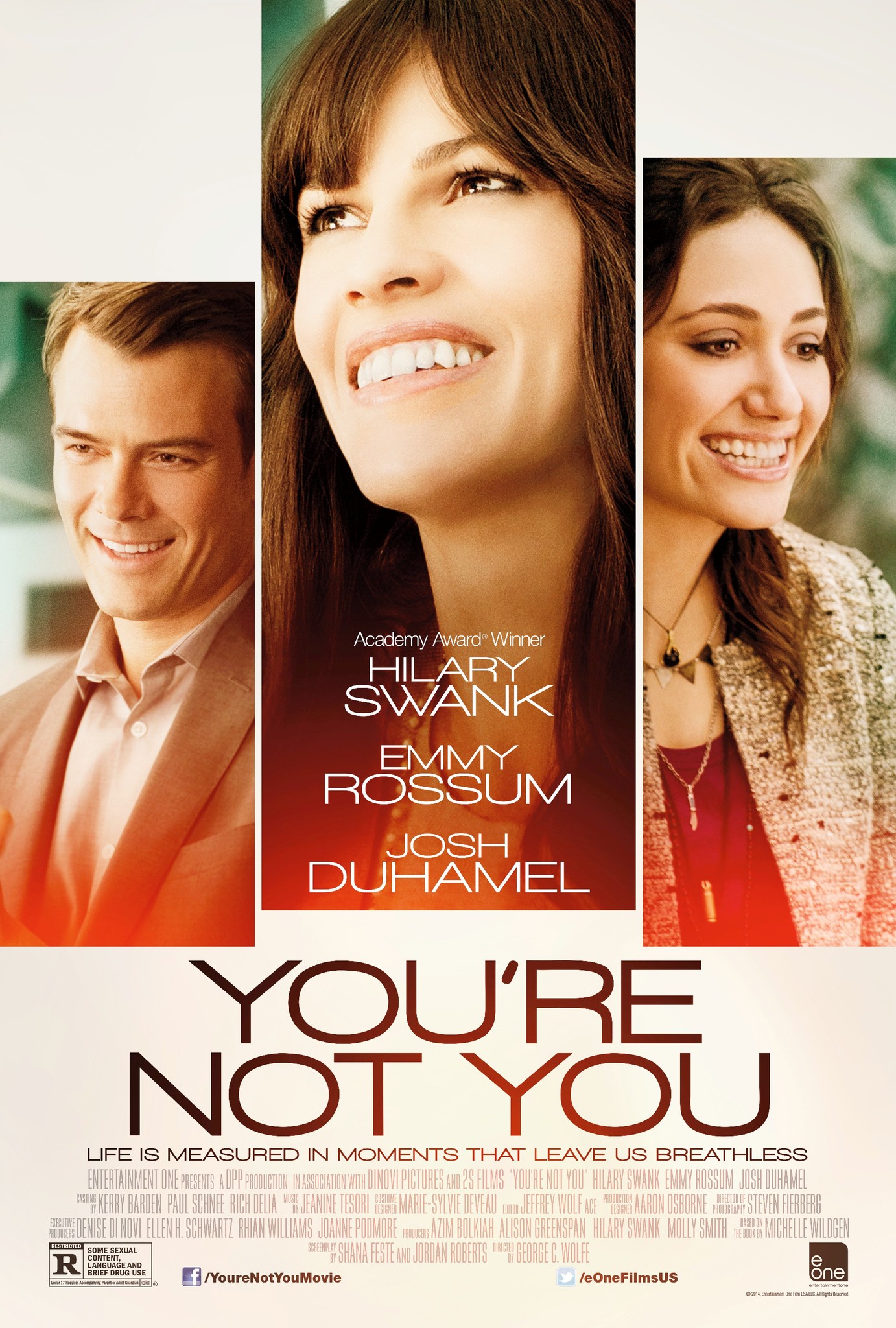
Image result for youre not you
Image retrieved from:
google images
       Now thirteen years later I feel like I have a better understanding of what Ali and her family went through and maybe why she never really talked out it. Following the OT 537 lecture on Amyotrophic Lateral Sclerosis, I decided to watch the movie "You're Not You" about a woman, Kate, in her thirties diagnosed with ALS. The movie following this fictional character as she navigates her final years and the progression of the disease.
     Prior to the lecture and movie, all I knew about ALS was that it took my friends dad young and there was an ice bucket challenge to raise awareness. However I now feel like I have an understanding of what happens to an individuals body and the differing mindsets that one goes through. In the movie it is abundantly clear that Kate is of sound mind and is struggling with the people she knew prior to her diagnosis. "You're Not You" dives into what a diagnosis like ALS does to not only an individual but the support system as well.
      Kate's marriage struggles following her diagnosis, her husband is caring for her but begins to stray from their marriage and her friends begin to treat her differently. Because of this Kate develops a very strong relationship with her new caregiver. Together they join an aquatic therapy group and Kate is able to meet friends in similar circumstances. Her overall mind set is improved and she is able to enjoy her last months. SPOILER, in the end she is able to make amends with her husband and friends and they have their time together as well.
      I do believe that this movie brings to light issues that Occupational Therapist are responsible for addressing which is support system education and assistance. I know my childhood friends family could have found benefits in additional supports. This lead me to research ALS support groups. For the purpose of this blog I searched the state of Tennessee. I found that there are 5 support groups across the state located in the Tri-Cities, Knoxville, Chattanooga, Nashville, and west TN. I will link that information below.
Image result for als association
image retrieved from google images.
      I also looked into resources for children. I found that the ALS association has linked approximately 17 sites for more information for children to learn about or cope with a family member having ALS. This includes grief camps and counseling, webinars, and Facebook pages. All incredibly help resources for families to build a community of others who understand what they are going through.
     Overall I think raising awareness about ALS and the effects it has on families is imperative and movies like "You're Not You" are essential to that process. Occupational therapy plays such an integral role in helping individuals and families learn about what is going to happen next and make sure they know that they are not alone.


Links:
You're Not You: Ways to Watch
Tennessee ALS Support Groups
ALS Children's Resources


Reference:

Children's Resources. (n.d.). Retrieved from http://webdc.alsa.org/site/PageServer?pagename=DC_8_PALS_Resources_Children


Support Groups. (n.d.). Retrieved from http://webtn.alsa.org/site/PageNavigator/TN_8_SupportGroups.html?_ga=2.57776418.947242325.1566101634-5536838.1564614921&_gac=1.116540148.1566147328.CjwKCAjw7uPqBRBlEiwAYDsr1xdM_DzPu-ejSGqdjc6DorEvCOlo4rDC6VGgw8AtNb7bcHpArxjFXRoC8w4QAvD_BwE

Monday, August 5, 2019

Queer Eye: Disabled But Not Really

Neuro Note 2 OT 537


Advocacy is SUCH an integral part of occupational therapy and let me tell you, pop culture is beginning to advocate for special populations in ways that make my OT/s advocation heart SING.

The show "Queer Eye" by Netflix is a show about transforming 5 aspects of a persons life; eating habits, personal style, appearance, home/interior design, and lifestyle and culture. I have enjoyed this show for a little over a year now. Queer Eye is such a happy, uplifting show and delivers message about self acceptance and advocacy. The second episode of the fourth season profiles a man named Wesley Hamilton, he is in his early 30s and is 7 years post spinal cord injury.


Wesley Hamilton
Image retrieved from: disabledbutnotreally.org
A little about Wesley and his injury. At the age of 24 Wesley was shot multiple times in the  and thus sustained a lower level spinal cord injury, specifically a T11-T12 incomplete SCI. He still has mobility and function in his upper extremities and values spending time with his daughter and family, working out, running his nonprofit, and motivational speaking. His spinal cord injury has CHANGED HIS LIFE and he has the most amazing attitude however it did not start this way. He initially struggled with depression, self image issues and debilitating decubitus ulcers (bedsores) that led him to hospitalization and surgery. Wesley began transforming his life through diet and exercise.

After the transformation in his life Wesley began the "Disabled, but Not Really" nonprofit organization to spread awareness about nutrition and healthy living for people of all abilities. There mission is as follows;


"Our mission is to instill in those with disabilities, a physically limitless mindset that breeds courage, confidence, and competence. Our core beliefs are in promoting fitness, providing the opportunity to become productive and self-serving while gaining the knowledge necessary for a living a nutritional lifestyle.
At Disabled But Not Really, we believe that our horizon is only as far as we accept it to be. Our vision is to create an environment where anyone with a disability can find a safe place for growth. We intend to develop facilities where not only our adaptive athletes can learn, grow, and thrive, but their families, spouses, and caregivers can as well."

The DBNR website profiles seven athletes who are currently working and training with the non-profit. Of these seven athletes six has sustained spine cord injuries at varying levels mostly in the thoracic region. This organization is bring awareness to the athletic community about the ABILITIES of individuals with SCI and other "disabilities" that are typically misunderstood. I think moving forward I will use Wesley's story to inspire others; both individuals I meet in a therapy settings and in causal settings.

Another thing I have taken from this research and the episode of QE was the amazing remodel that was done of Wesley's home. The Fab Five restructured Wesley's bathroom to make it more accessible to him and give in quite a bit more independence. To do this remodel, Bobby Berk, Antoni Porowski, and Karamo Brown met with Wes and essentially did and occupational profile to determine what barriers he was facing and ways to adapt areas of his life for improvement. The laundry room was moved to an accessible location with a front loading washing that Wesley is easily able to reach, all cabinets in the kitchen are now low enough for easy access, the bathroom mirror has been slanted downward so he can see himself to get ready, and so many other subtle but life changing modifications. 
Image result for disabled but not really mission
Image retrieved from: google images
I highly recommend taking 60 minutes out of your day to watch Queer Eye but specifically this episode, then take another 10 and do some research on DBNR, then if you're really feeling it watch Wesley's Ted Talk below. Learn and advocate, just like the fab five and Wesley have done and are doing!!!


Reference:

Bio. (n.d.). Retrieved from https://www.iamwesleyhamilton.com/bio

Lewis, A. (2019, March 15). Queer Eye is back! So here's everything you need to know about the Fab Five. Retrieved from https://www.cosmopolitan.com/uk/entertainment/a18283218/queer-eye-netflix-fab-5/


SCI Superstar: Wesley Hamilton. (2018, February 26). Retrieved from https://spinalpedia.com/blog/2018/02/sci-superstar-wesley-hamilton/


We have a vision to inspire and empower the global disabled community through fitness, nutrition, and wellness. (n.d.). Retrieved from https://disabledbutnotreally.org/our-team/


Yang, S. (n.d.). Wesley Hamilton thanks the man who shot and paralyzed him on 'Queer Eye' Season 4. Retrieved from https://www.kansascity.com/news/local/article232753482.html


Monday, July 15, 2019

Hilarity for Charity: Is it groundbreaking for this generation?

Neuro Note 1 OT 537

      I have started a new routine. I decided to wake up every morning no later that 8:00 a.m. and watch the morning news. This morning (7/15/19), I was watching the Today show and considering what topic I would cover for my first Neuro Note when low and behold Seth Rogan is on my TV screen talking about Alzheimer's disease. 
Link to Hilarity for Charity
Image from: google images
      The segment was about millennials and prevention of diseases that effect the brain, specifically Alzheimer's disease. In 2012 Seth Rogan and his wife started a foundation titled "Hilarity for Charity" which centers on research for degenerative brain disease, awareness for individuals in their 20s and 30s to prevent brain disease, and destigmatizing ideas surrounding brain disease. The segment also interviewed three millennial who advocate for Alzheimer's awareness and prevention. One being a published author that I will touch on later.
      I did some further research into the website and I was immediately prompted to sign up for information with boxes like caregiver resources, events, advocacy, brain healthy tips and Alz news. Following this I clicked the tab "This is Alzheimer's" where there are facts and personal stories about the disease. Some facts listed are as follows:
  •  5 million Americans are living with Alzheimer's disease.
  • Alzheimer's is the 6th leading cause of death in the US. 
  • Alzheimer’s is the only cause of death among the top 10 in America without a way to prevent, cure, or even slow its progression.  
      I took the time to read 3 of the 20 plus stories written on the website. The personal testimonies and information provided was raw and eye-opening. One quote from the stories I read jumped out to me:

 "Jo was finally diagnosed when he was 37, he’s now 42 and in the later stages of the disease. And also that Alzheimer’s affects all parts of the body as the brain is continually and irreversibly damaged; it isn’t just about forgetting – if only it were that simple." 

Link to buy Genius Foods
Image from: Amazon
This really goes to show that Alzheimer's does not discriminate based on age. Thats why in the Today show segment the profile of a young man in his 30s, Max Lugavere, who wrote the book "Genius Foods" but the help of Paul Grewal, MD. This book focus on foods to help maintain brain health. On the Today show and in the book discussion of an increase of antioxidants in ones diet. I did some follow up research and according to the journal Neurological Sciences article "Dietary Pattern in Relation to the Risk of Alzheimer's Disease: A systematic review" there is a correlation. Hilarity for Charity briefly mentions diet under their tab "Brain Health."      As an occupational therapy student it is my job to learn about neurological disorders and how to advocate for individuals with neurological disorders however today I feel like I learned a little about how my generation is working to prevent early onset of the neurological disease that takes away one's memory.
Andres Lozano, TEDtalk
TEDtalk on Deep Brain Stimulation
Image from: google images
      One final point I would like to make is from a TEDtalk I watched. This TEDtalk was filmed in 2013 and focused on Parkinson's Disease and deep brain simulation however it the final 5 minutes the talk touched on Alzheimer's and its correlation to deep brain simulation. The talk discussed using deep brain simulation to increase glucose level in the brain to "turn the lights back on". I would love to see some of the neurological aspects of Alzheimer's Disease integrated in the millennial discussion. Maybe I will write in to Seth about glucose levels and deep brain stimulation to get the word out there.

 Reference

Hilarity for Charity. (n.d.). Retrieved from https://hilarityforcharity.org/ 

Lozano, A. (n.d.). Retrieved July 15, 2019, from https://www.ted.com/talks/andres_lozano_parkinson_s_depression_and_the_switch_that_might_turn_them_off#t-800364

Samadi, M., Moradi, S., Moradinazar, M., Mostafai, R., & Pasdar, Y. (2019). Dietary pattern in relation to the risk of Alzheimer’s disease: A systematic review. Neurological Sciences. doi:10.1007/s10072-019-03976-3

TodayShow. (n.d.). Retrieved July 15, 2019, from https://www.today.com/video/getting-ahead-of-alzheimer-s-young-people-look-to-protect-brain-health-63867973518

Thursday, June 6, 2019

On Bed Mobility: Biomechanics Blog Post Seven

Mobility is something most people take for granted. We think nothing of walking across the room to pick up an object or even getting out of bed without additional devices or help. However these abilities are not available to everyone whether it be due to a disability since birth, degenerative diseases, age, or an acquired injury.

Knowing the aforementioned information, it is helpful to know that there is also a "Hierarchy of Mobility Skills" that scale mobility from bed mobility to to community to mobility and driving. I personally had not taken the time to think of mobility in a specific order before learning of this BUT now that I do know I think it makes perfect sense. When learning or relearning mobility skills it is critical to build on the skills. Starting with bed mobility and moving to mat transfers, wheelchair transfers, bed transfers, mechanical ambulation for ADLs, toileting and tub transfers, car transfers, functional ambulation, and finally community mobility and driving is the technical chronological order.

I do think it is important to note that the order of learning these skills can overlap and should overlap. A person should find their just right challenge and use self reflection to find their level of comfort in moving from one skill to the next. I also think it is important to note that learning proper mobility takes practice and can be adapted slightly per person. In lecture we were shown a video of an individual with a spinal cord injury getting in and out of bed. He has learned this skill and adapted it to his personal preference while still following safety precautions. In simulation lab we as class learned that doing this the first time can be awkward however we found that practice is key and I believe it will be the same when working with clients.

I agree with the hierarchy of mobility skills as a blueprint for adaptations of movement and ADLs. I look forward to applying the knowledge in practice in the future!

Saturday, June 1, 2019

Assistive Devices: Biomechanics Blog Post Six

Assessing proper fitting for: Canes, Axillary crutches, Lofstrand crutches, Platform walkers, and Rolling walkers


Why is important to fit an individual for an assistive device? For one, no two people are made the same therefore to properly fit an assistive device an individuals height, stability and comfortability must be taken into account as well as their needs. For example does this person fatigue easily? Should they be fitted for a device that includes a seat? Or does this person need supplemental oxygen? Should they be fitted for a device that includes space for an O2 tank?

How exactly does one fit for these five different devices?

Image result for crutches clipart
Image retrieved from google images
Canes: Have the client stand with arms relaxed at their side. The cane handle should be in line with the wrist crease, ulnar styloid, or greater trocanter. When holding the cane the elbow should be fleced approximately 20-30 degrees.

Axillary Crutches: Estimate the length of the crutches based on the individuals height, the arm rest should be 2 to 3 finger lengths from the axilla and hand grips should be in line with the greater trochanter. Have the client stand with arms relaxed at sides and adjust height of crutches accordingly.

Lofstrand Crutches: Hand grips should be facing forward and at the height of the clients greater trochanter. The arm band should be positioned 2/3 of the way up the forearm, proximal to the elbow.

Platform and Rolling Walkers:  Estimate the appropriate height of the walker based on the clients height, adjust the hand grips so they are in line with the greater trochanter, ulnar styloid or wrist crease. Elbows should be flexed to approximately 20-30 degrees. *Platform walkers should have the platform positioned to allow the elbow to be flexed to 90 degrees, the proximal ulna should be positioned 1 to 2 inches off the platform surface. The handle of the platform need to be position medially for the clients grip comfort.


Information retrieved from MOBI app.

Monday, May 20, 2019

Proper Posture and Body Mechanics: Biomechanics Blog Post 5

The right way to sit and the right way to move; could it be life changing? 4 main reasons to adjust your posture and movement for improvement!


  1. Maintaining natural curvatures of the spine. There are two lordotic curve and two kyphotic curves. Deformation of these curves can lead to a plethora of issues such as thoracic kyphosis, lumbar lordosis, flatback, swayback, or kyphosis-lordosis. 
  2. Alignment of the body parts. The ideal position would have gravity centered over the base of support. This allows body systems to function properly.
  3. To avoid disc compression. When the spine is overly flexed or extended it has the potential to result in a bulging, herniated, ruptured, or even fragmented disc. 
  4. Prevent back pain. Back pain is a result of bad posture, lack of flexibility, improper body mechanics, or excessive stress in various aspects of life.

Using OT to intervene with issues of improper posture and poor body mechanics:

  1. Demonstrate proper lifting techniques; using the rod to show the erect back, bending of the legs, and the weight being as close to your body as possible.
  2. Go through various therapies in different sitting positions explaining the different positions and their importance. Examples being anterior sitting prior to standing to catch a ball or middle sitting to play cards.


Wednesday, May 1, 2019

A Strange Short Story: Biomechanics Blog Post Four

Man from the South


The man from the south is a short story about a betting man and a solider he encounters on a sunny day at the pool. In the story the betting man habitually bets his car or the cutting off of a finger. In the end we come to find that his wife has been betting him for quite some time and has lost three fingers in the process. 

For the purpose of this blog post I will be focusing on the wife and her unfortunate finger loss. She has been left with a thumb and index finger. Many activities of daily life will be affected but since it is told in the story she has a car I have decided to focus on her ability to drive. Driving will be affected because the wife will have trouble gripping the steering wheel with only two fingers. The typical grip for holding a steering wheel would be a power grip however with only a thumb and index finger this may be challenging. Strategies to combat this barrier would be grip strength exercises to improve pinch grip. 1 modification I came up with would be adding velcro to the steering wheel and making her a velcro glove. This way she can use her palm and ensure that it is on the wheel, while using grip from the two fingers to turn the wheel back and forth. 

Tuesday, April 30, 2019

Foundations of Occupational Therapy- Course Take-Aways

I honestly feel like I took a lot away from the Foundations of Occupational Therapy course. The nature of the class was not very stressful and was engaging, which is something a student can really look forward to during a graduate program. Two of my biggest take aways from the course content would be the emphasis on the holistic approach to occupational therapy and the OT process. However there were many other things I will take away such as therapeutic use if self, cultural humility, test taking skills and interprofessional (?) skills, and a general approach to how to treat people you work and interact with.

Foundations really emphasized the holistic approach to OT. Looking at a person as a whole and all aspects of their life. Taking to time to consider nonverbal communications, living situations, and most importantly what is important to the person you are working with. Taking the time to actively listen to clients when they begin telling you about their life and their struggles (and successes!).

The OT process is the evaluation, the intervention, and the outcome. The evaluation being an interview with a client or family member, a standardize test or assessment, or an observation. The intervention being what you decide to do based on the evaluation and the outcome being the progress made by the client. I think a big take away from this is the idea that sometimes an OT will have to go back reevaluate and develop a new intervention, sometimes even multiple times.

Sunday, April 14, 2019

Scapulohumeral Rhythm: Biomechanics Blog Post Three

What is the clinical relevance of the Scauplohumeral Rhythm? And how can it affect your ROM measurements of the shoulder?

The Scapulohumeral Rhythm is the relationship of movement between the scapula and the humerus as well as the related joints for example the Scapulothoracic Joint and the Glenohumeral Joint. The clinical relevance of this rhythm is to help maintain space and confirms a synchronized movement of the joints and the bone structures. The scapulohumeral rhythm also aids in maintaining length tension relationships, the subacrominal space and prevent active insufficiency of the glenohumeral muscles.

Without Scapulohumeral Rhythm range of motion will be limited due to humeral heads inability to rotate laterally. If the humeral head cannot rotate laterally then the greater tubercle will not be able to pass the acromion. Scapulohumeral Rhythm also affects range of motion because the movement is happening between two joints all there to be much MORE range of motion in the shoulder. 

Monday, April 8, 2019

Podcast/TEDtalk Review- KC

PODCAST REVIEW: Nature Based Therapy

I really enjoyed this podcast because I felt like it drew on my background in recreation therapy. Finding ways to integrate my two degree in my work as a therapist is something I aim to achieve. The podcast discussed using the outdoors for pediatric referrals and children who are struggling with hand writting specifically. I think at some point in my career it would be great to find ways to use nature based therapy with other populations. Possibly a modified version with geriatric populations. I really enjoyed this podcast because it highlighted a new approach to OT that I had not considered!

TEDTALK REVIEW: Universal design


Universal design. This is a concept that I did not realize had a defined name and I love it! Universal design is the idea that product should be designed with all abilities in mind. I love this because again it makes me think of my undergraduate degree in recreation therapy and all the bikes, kayaks, and various sports equipment I spent hours adjusting and modifying for specific individual use. I love the idea that we are moving or at least creating awareness about the need to move in the direction of creating this EVERYONE can use. 

Sunday, April 7, 2019

Positioning and bony landmarks: Biomechanics Blog Post Two

why do we use bony landmarks?

-interrater reliability
-intrarater reliabily
-to make sure we are testing the right thing

Why do we use “test position” for manual muscle testing?

To test there ability to move with gravity and to get baseline understanding of there muscle strength.

Why do we use gravity eliminated position?

When a patient have low muscle strength you must remove gravity to see there ability to move their muscles independently. This will also establish a baseline for muscle strength.

An OT must use ROM and MMT to understand where a patient stands prior to treatment do evaluate improvemen and to make sure no harm is done.

Monday, April 1, 2019

Actions of Daily Livings: Biomechanics Blogs Post One

Choosing an action/movement you do as a part of your daily routine...


Image from: Google Images
      Take a moment and think of the actions you do every day. Most of us, I know I do, brush our teeth every day at least twice a day. The movements involved in brushing your teeth are many and complex. When I lift my toothbrush to my mouth I am abducting my shoulder.
      For the purpose of this blog post assignment I will be focusing on the shoulder abducting. This is the initial movement and it is done in the frontal plane and in an open chain. After the other motions of brushing my teeth (horizontal rotation and elbow flexion and extension) I will adduct my shoulder to a neutral position.
      When the shoulder is abducting it is in neutral rotation. The arthokinematics of this action is the humerus which is convex rolls up and then glides down in the concave glenoid fossa. 

Thursday, March 28, 2019

using “self” therapeutically

what is the therapeutic use of self?

It’s going to be different for everyone. For me it’s going to be doing my best to envision myself in the individual that I’m treatings position so I can attempt to grasp what they are going through. Most people will say that therapeutic use of self is drawing on past experiences, I think that is a huge part of developing a therapeutic use of self. However it is also important to balance your own personal experience (because those are unique to you) and what the individual you will be working with is going through.

Thursday, March 14, 2019

Disability Over Time: A Lecture Review

On Thursday March 14, 2019 I had the opportunity to sit through a guest lecture on the history of disability in the United States of America. The lecture made critical points, had imperative take aways, and was all together eye opening. 


Dr. Bruce Keisling, PhD presented to the UTHSC 2021 occupational therapy cohort on a subject that many shy away from: the dark history of our countries treatment of individuals with various disabilities over the past 150 odd years. This lecture highlighted the past present and future. The past being the institutionalization of individuals from birth prior to the 1970s. It was in the 1970s when parents, mother specifically, took a stand and began choosing to keep their children out of the institutions with largely treated individuals with disabilities as less than human. The lecture also touched on some of the important legislation passed in last 30 years, like the Individuals with Disabilities Act (IDEA) and the Americans with Disabilities Act (ADA) with allowed for more equal rights for individuals with disabilities. In my opinion my favorite take away, a point I have heard made before but really took to heart from this lecture was disability rights are civil rights and should be considered as such. 

How does all of this apply to a fUTure OT? Well... one of the final points made by Dr. Keisling was "Should be all be so lucky, we will all be disabled during our lifetime." This is reference to aging and needing assistance as we age in various parts of our life. As occupational therapist we will be working with special populations of kinds. Largely those affected by some degree of disability at any point in the life span. Understanding the evolution of services available and the meaningful role advocacy has played in changing and challenging those services will make us the most effective generation OTs we can be. 

Let's Talk Mock (Interview)

  How do you feel the interview went overall?  I believe the interview went really well. It was generally what I was expecting, with intervi...